Beyond the Classroom: What Studying at the Academy of Fine Arts in Warsaw Taught Me About Art, Culture and Collaboration
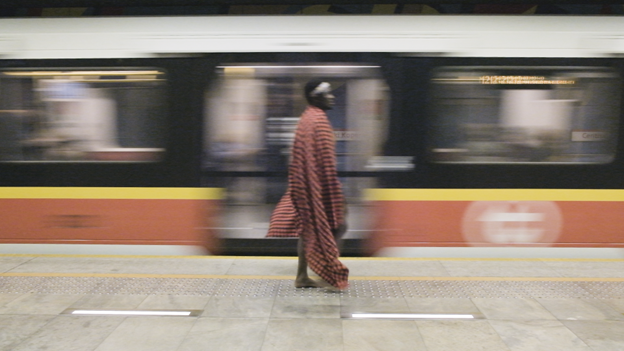
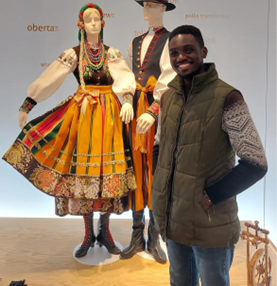
When I left Kenya to study at the Academy of Fine Arts in Warsaw, I thought I knew what I was going there to learn. As a theatre artist, I expected to deepen my artistic skills, experience a different educational system and observe how theatre was practised in Europe.
I was not entirely wrong, and I even got something much better and much bigger.
The greatest lesson I took home had very little to do with learning a new performance technique. Instead, it was about people, cultures and discovering that art becomes richer when different perspectives meet.
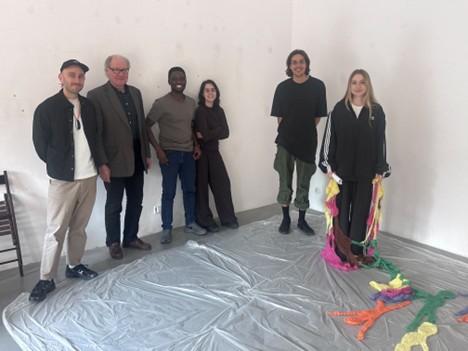
My background in Kenya had taught me to see theatre primarily through performance. At the Academy, however, I encountered artists working across painting, sculpture, graphic design, installation, film, photography and performance. What surprised me was how naturally these disciplines spoke to one another. A conversation with a photographer could influence a theatre performance. An installation artist could reshape the way I thought about space on stage. A filmmaker could challenge my understanding of storytelling.
I realised that collaboration is not simply working together; it is allowing another person’s way of seeing the world to transform your own.
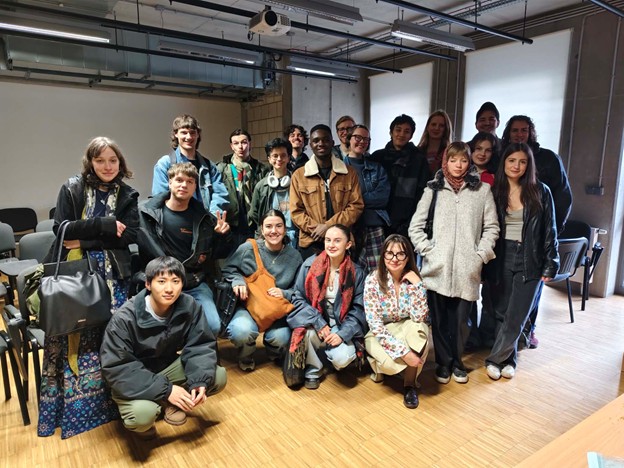
Equally transformative was learning alongside students from different countries. Every discussion became an opportunity to understand how culture shapes artistic expression. We brought different histories, languages and traditions into the same room, yet creativity gave us a common language. It reminded me that while our stories begin in different places, art has a remarkable ability to create shared understanding.
Some of my favourite memories was something much simpler than any studio project: attending Polish language classes and hoping to gain a chocolate for good pronunciation, I did!
At first, even the simplest phrases felt intimidating. Saying Dzień dobry or Dziękuję required concentration and confidence. My pronunciation was far from perfect, but each lesson made everyday interactions a little easier. Those small moments mattered.
What made the experience truly exceptional, however, was the support I received from the lecturers. Their encouragement went far beyond academic supervision. They challenged my ideas, listened carefully to my questions and treated my perspective as valuable. As an international student, that kind of trust gave me the confidence to take creative risks. They created an environment where experimentation was welcomed and where mistakes became opportunities for growth rather than reasons for hesitation.
That support changed the way I think about education.
I came to understand that the best teachers do more than transfer knowledge. They cultivate curiosity. They encourage students to ask difficult questions, to explore unfamiliar ideas and to believe that their experiences deserve a place in artistic conversations.
Looking back, I realise that my time in Warsaw was never only about studying abroad. It was about learning how to collaborate across disciplines, communicate across cultures and appreciate the generosity that exists within artistic communities.
As I return to Kenya, I carry more than memories of Warsaw. I carry a renewed understanding of what theatre can become when it embraces dialogue with other art forms and with people whose experiences differ from our own. I also carry the belief that international exchange is not about leaving one’s culture behind; it is about returning home with new perspectives that deepen one’s appreciation of where one comes from.
The Academy of Fine Arts in Warsaw gave me much more than an academic experience. It reminded me that art flourishes when we remain curious, generous and open to learning from others. For that, I will always be grateful.
Gadwill Odhiambo